- Location Strategy Chartbook
- Posts
- Location Strategy Chartbook 12.20.25
Location Strategy Chartbook 12.20.25
Real Estate Market Insights
Happy holidays, Merry Christmas and Happy New Year. We’ll be on hiatus and will see you in the new year.
Goldman Sachs Research forecasts the global economy will generate “sturdy” growth in 2026. In fact, our economists’ forecasts for most major countries are at or above consensus estimates.
“As has typically been the case since the pandemic, we are most optimistic (relative to consensus) in the US,” writes Jan Hatzius, chief economist and head of Goldman Sachs Research, in the team’s report titled “Macro Outlook 2026: Sturdy Growth, Stagnant Jobs, Stable Prices.”

Delayed data show that the pace of consumer spending slowed heading into the final quarter of 2025, but retailers raised few alarms in their early holiday shopping season reports. Retail sales data for October showed little change over September overall, and some sectors saw solid gains.
Higher-income households, bolstered by the wealth effect of higher asset prices, have continued to drive demand for discretionary goods, such as travel, entertainment and big-ticket items like cars and appliances. At the same time, discounters have reported that middle-income households are trading down as persistently elevated inflation and job market skittishness weigh on their spending.
Thus, a K-shaped pattern has emerged in consumer sentiment data, with survey respondents reporting consumer sentiment near all-time lows while sales continue to grow.

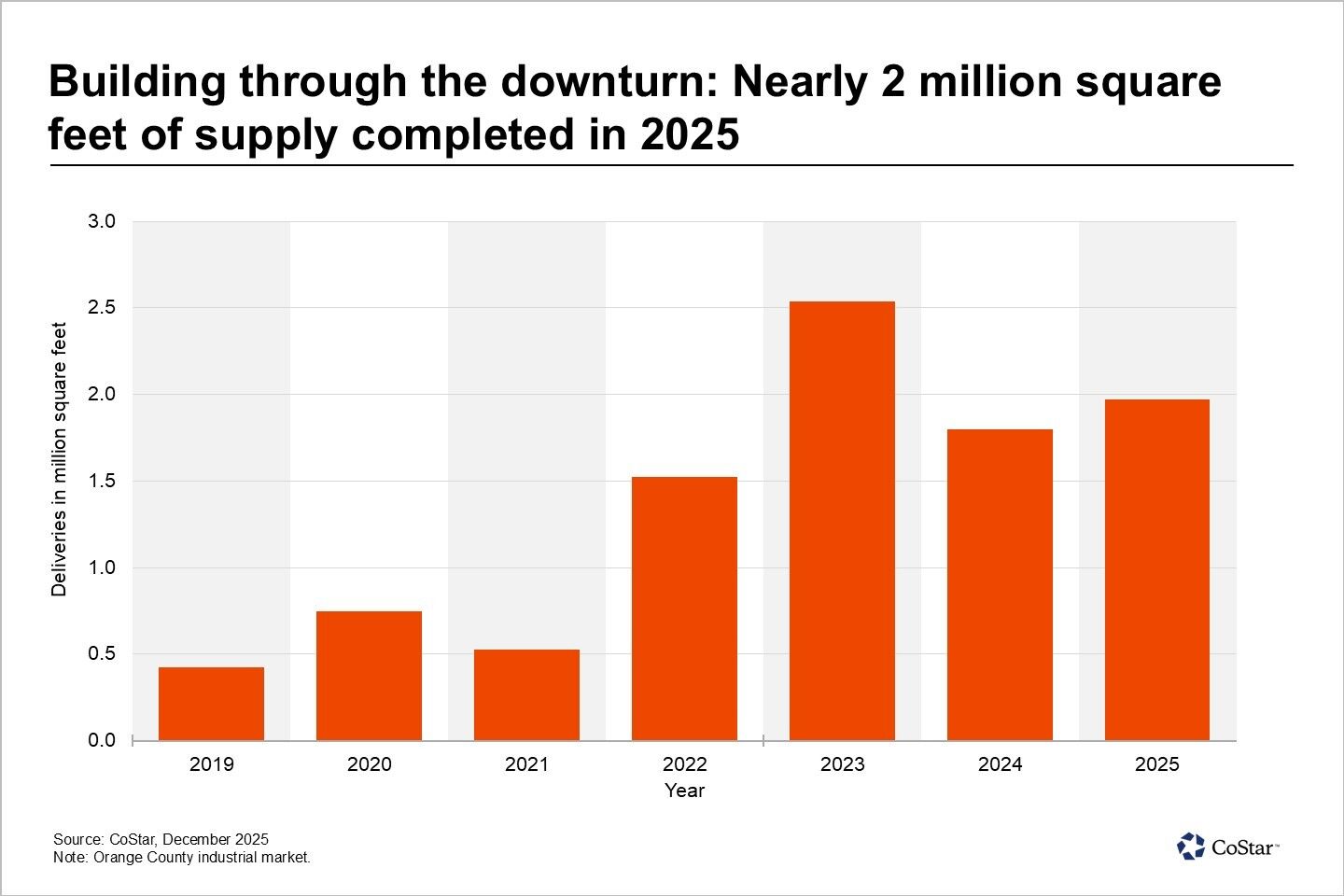
Orange County’s industrial sector is navigating a challenging landscape as new supply is completed amid a period of contracting demand. Deliveries are projected to reach nearly 2 million square feet in 2025, approaching the 20-year high of 2.5 million square feet in 2023. With 80% of the space completed in 2025 or under construction available for lease, owners are offering concessions and cutting rents to attract tenants.
Irvine leads development, with eight buildings encompassing over 1 million square feet of inventory completed in 2025 or under construction as the year comes to a close. Other developments are scattered across Orange County, with notable activity in Anaheim, Santa Ana, Cypress and Huntington Beach.
Tenant demand for the larger new buildings has been soft. Only seven of the nearly 20 buildings larger than 100,000 square feet completed since 2024 have been leased. Of their cumulative 2.8 million square feet, 67% remains available. Demand is stronger for buildings under 100,000 square feet among both single- and multitenant properties. Twenty buildings of this size range have been completed since 2024, and, conversely, only a few, accounting for 16% of the completed space, remain available for lease. Most recently, Pacific Aerodynamic leased a new 52,000-square-foot building developed by Rexford Industrial, 2390 N. American Way Orange, on a five-year, two-month term.
Developers have lowered rents on recently completed spec developments that have been lingering on the market from over $2 per square foot, triple-net, to a range of $1.65 to $1.80 per square foot. Overall, asking rents for all industrial buildings in the market have declined by roughly 12 percent from peak levels, reflecting elevated vacancy and competitive conditions amid a shrinking tenant base.
Potbelly Sandwich Works expects to open 50 new locations next year, including its first store in Atlanta, as part of an aggressive growth plan that follows its acquisition by a Southeast convenience store chain.
The Potbelly chain has identified 23 locations for its planned 50 new stores in 2026, including locations in the following markets: Houston, Texas; Cleveland and Columbus, Ohio; Jacksonville, Florida; Charlotte, North Carolina; and Hampton Roads, Virginia, among others.
RaceTrac acquired Potbelly in October for $566 million, part of a wider trend of convenience store operators expanding foodservice offerings. Rivals like QuikTrip, Sheetz and Wawa are beefing up menus primarily through in-house methods, such as adding larger kitchens inside stores and enlarging food distribution centers to better service locations.
Privately held RaceTrac, which has about 800 stores primarily in the Southeastern and South Central regions under the RaceTrac and RaceWay names, said after its Potbelly acquisition announcement that it doesn’t plan to locate Potbelly shops in all its convenience stores.

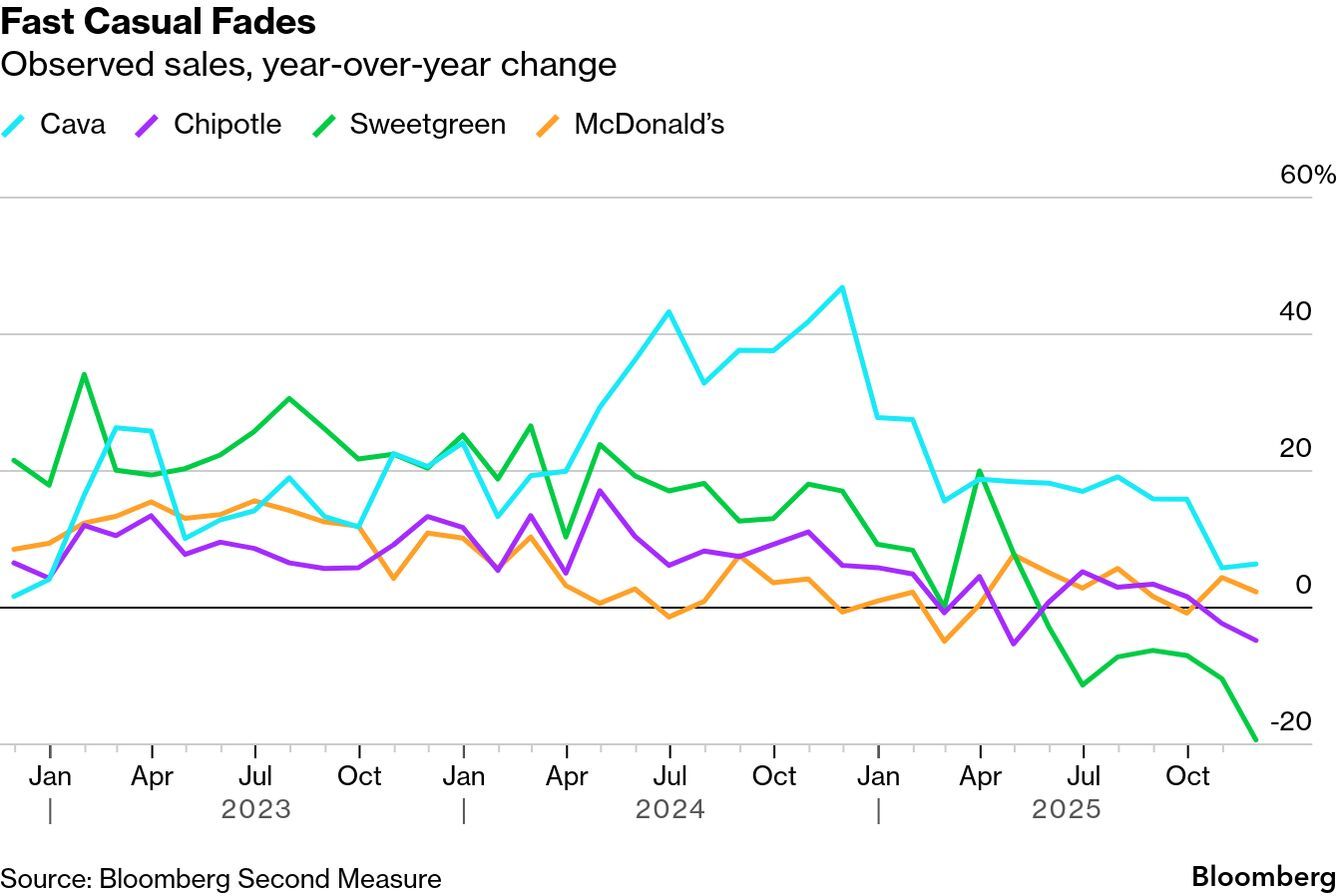
For many of the fast-casual chains that have grown so much over the past decade, the economic slowdown that already hit the fast-food industry has finally arrived. Only now, as chains like McDonald’s and Burger King boast rebounds helped by deals on discounted meals, healthy fast casuals are discovering that even relatively well-to-do workers have their limits.
The industry’s last round of earnings laid bare how vulnerable this once fast-growing niche really is. The most striking results came from Sweetgreen Inc., the chain that taught office workers to spend $17 on a sad desk salad. Its sales fell 9.5% in the third quarter from the prior-year period, even more than Wall Street had predicted, sending its shares plummeting; as of Dec. 15, it had lost 77% of its market value in 2025. Chipotle Mexican Grill Inc., the first national chain to market ingredients as more ethically sourced—and therefore worth more money—also delivered bad news. After predicting its performance in 2025 would be flat with 2024’s, it now says it will see a sales decline in the low-single-digit range. Its shares were down 40% for the year as of Dec. 15. Cava Group Inc., the once-unstoppable maker of Mediterranean bowls, says foot traffic has stalled. It still expects sales growth from existing restaurants for the year, but only 3% to 4%, it says, not the 4% to 6% once predicted.
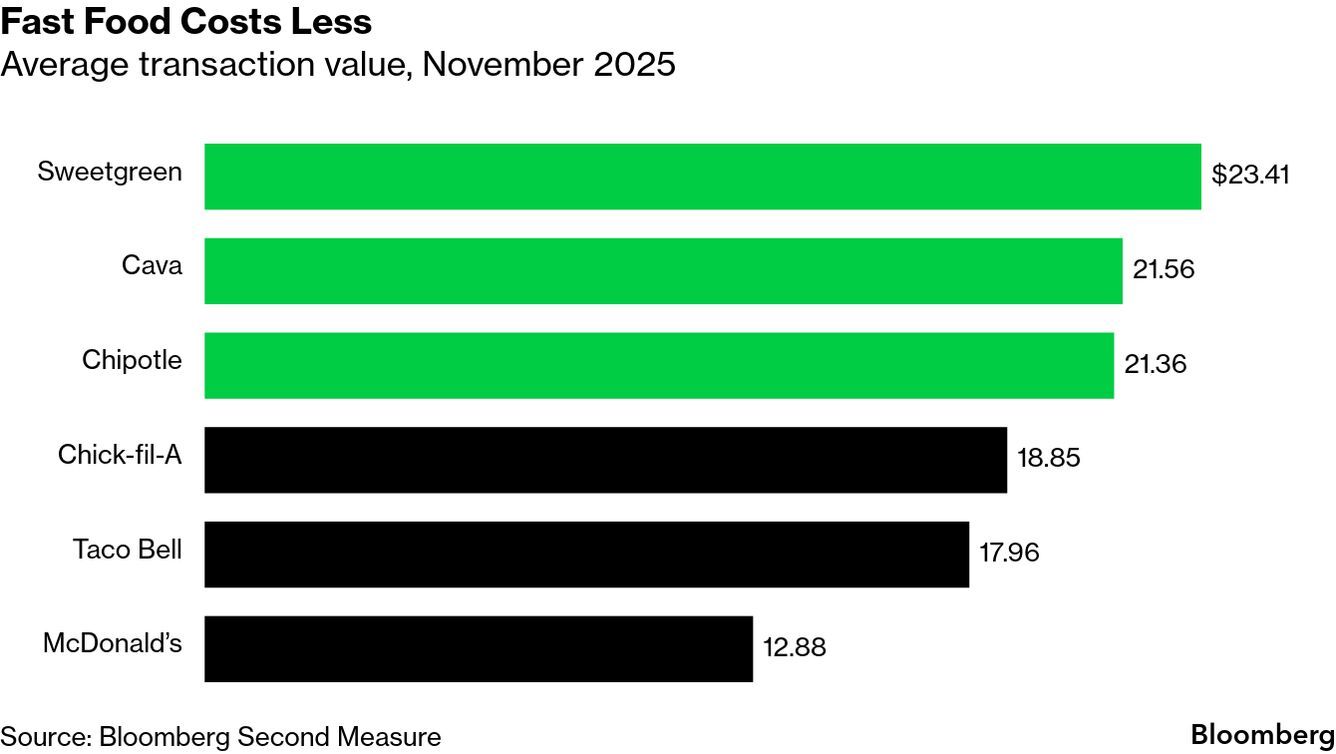
Chipotle and Cava both seem allergic to the suggestion that lower prices might help with flagging demand. “Value as a price point is not and will not be a Chipotle strategy,” said CEO Scott Boatwright in a recent earnings call, even while acknowledging that the fast-casual sector “has been deemed unaffordable.” A few days later, in his company’s earnings call with analysts, Cava CEO Brett Schulman, said basically the same.
At market research firm Technomic, analysts track how consumers perceive value. “Price became the most important factor this year for the first time” in the restaurant category, says Richard Shank, vice president for innovation, speaking about how consumers consider the various components of value. “It used to sit in the fourth position,” after quality, service and portion size. In December, Just Salad dropped the price of one of its market plates from $14.99 to $9.99 in Manhattan; sales more than doubled. Sweetgreen has told investors it’s evaluating its prices, offering a loyalty program that comes with discounts here and there, providing some lower-priced seasonal options and, in December, a $10 bowl. Getting people back in the door may require Sweetgreen to make such offerings a regular presence on the menu, which would render the difficult economics of an industry with famously thin margins even more challenging. There’s one obvious way to drive down the cost of bowl-making, though: Offer smaller salads at a discount. A so-called healthy lunch can get close to the 1,000 calorie mark at many fast-casual restaurants, which is more than many people—especially the increasing number taking GLP-1 weight loss drugs—are looking for in the middle of the day. Fast-food restaurants once found success by offering customers much more food for a bit more money. Maybe it’s time for fast-casual restaurants to do the opposite—and cater to the crowd who thinks that, in this economy, less is more.
From the NAR: NAR Existing-Home Sales Report Shows 0.5% Increase in November
Month-over-month • 0.5% increase in existing-home sales – seasonally adjusted annual rate of 4.13 million in November • 5.9% decrease in unsold inventory – 1.43 million units equal to 4.2 months' supply
Year-over-year • 1.0% decrease in existing-home sales• 1.2% increase in median existing-home sales price to $409,200 emphasis added

SAAR: Seasonally Adjusted Annual Rate
During their earnings call on Wednesday, executives at Lennar—a giant homebuilder with a market capitalization of $27 billion—said the federal government is working on a plan to help alleviate strained housing affordability. Lennar executives said federal officials are actively engaging with homebuilders and industry groups to better understand constraints—and to avoid policies that could unintentionally damage supply. While no specific program was outlined, management suggested it would be “surprising” if no meaningful action emerged in 2026, given current discussions.
“I think the crystal ball around government activity is really complicated, but I can tell you that a number of homebuilders have gone in to see critical officials within the [federal] government. We have received a lot of attention. There's a lot of thought process going on. You've seen trial balloons put out around various types of programs. What's interesting is that the government has been very tuned in to the industry to make sure that they're not walking into unintended consequences. So whatever is done, that it be constructed properly, is important. And to your question of you know, do I think that something will come out in 2026? I'd be surprised if something isn't done. I think affordability is very much on the table. It's a political issue right now, and I think across the country, you're hearing the drumbeat of that being a primary focal point, and politically it's important that someone pick up the mantle and do something to address it, rather than just throw money at it. So it'll be interesting, and we'll have to sit back and wait and see what comes out.” Stuart Miller, co-CEO of Lennar, said on their December 17, 2025 earnings call

The opening of the Atlantic Station mixed-use project in 2005 showed Atlanta how the concept of a self-contained village of homes, shops, offices and restaurants could succeed. It turns out that now, 20 years later, plenty more developers think it's a good idea, too.
Atlantic Station came to life after the conversion of a former Atlantic Steel mill site about 4 miles north of downtown Atlanta, marking a milestone in local commercial property by reviving a section of the city. What had been industrial ruins cut off from the rest of Atlanta is now a collection of office towers and retail buildings, connected to Midtown Atlanta by a brightly colored yellow bridge spanning the Downtown Connector interstate highway.
It opened up a new part of Atlanta to development, the West Midtown district, that had been home to "a landscape of underutilized properties with limited connectivity and investment," said Vikram Mehra, senior managing director at Hines, the property manager for Atlantic Station.
In a way, Atlantic Station is a victim of its own success, facing added competition from other developments that sprang up in its image. At the same time, its popularity shows how successful projects can influence development patterns throughout a city.
A handful of nearby developments have benefited from proximity to Atlantic Station. That includes Star Metals, with an office tower occupied by online gambling provider PrizePicks and other tenants, and The Works, a 1950s industrial building converted into offices for Google, as well as shops and restaurants that complement its residential component.
"Live, work, play was the slogan of the real estate universe for a long time," said Henry Poer, senior vice president and Atlanta co-market leader at SRS Real Estate Partners, who has represented clients in retail leases at Atlantic Station. "I would argue it still is extremely relevant. Atlantic Station provided a blueprint for all three phases in an urban location."
It may be a local development trailblazer, but Atlantic Station still faces the headwinds of any property with some retail. That includes the upcoming departure of two tenants: a Publix supermarket and shoes and apparel retailer DSW. A Publix spokesperson confirmed with CoStar News that the Atlantic Station store will close on Dec. 27, but didn't specify the reason behind the closing. Designer Brands, the parent company of DSW, did not respond to CoStar News' requests for comment.


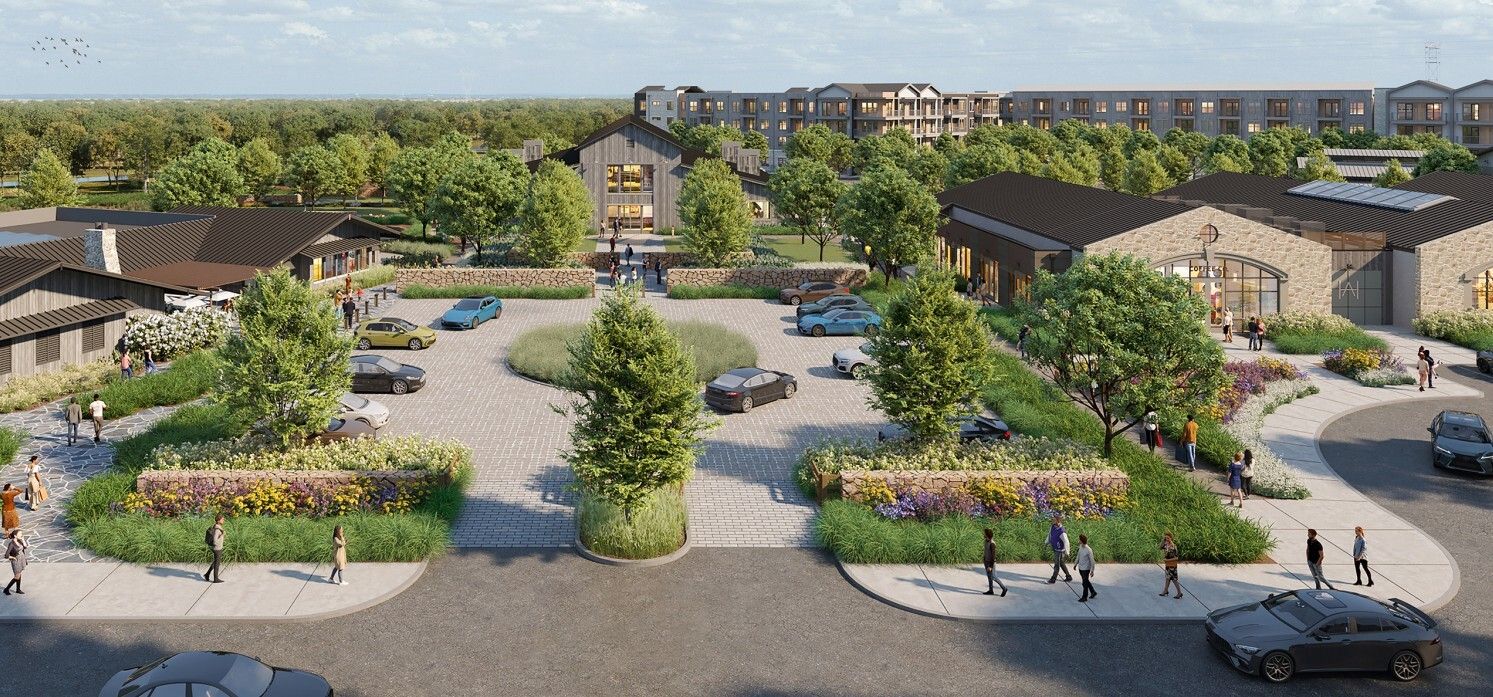
Construction on Haggard Farm, a $750 million, nearly 130-acre mixed-use project in Plano, Texas, a city about 19 miles north of downtown Dallas, is underway. The residential, retail and office project is being built through a joint venture between the Haggard family, Dallas-based Stillwater Capital and experiential hospitality firm WoodHouse.
From a farm-to-table restaurant to a boutique hotel and social club to office and living space, Haggard Farm is setting itself as a place of gathering and community in the Dallas-Fort Worth region. Parts of Haggard Farm are expected to include a working farm with vineyards, a bee yard and seasonal crops.
WoodHouse, the creator behind concepts such as Dallas' private social club Park House and The Moore, a private members club with a hotel and restaurants in the Miami Design District, has been tasked with delivering a curated farm experience to Haggard Farm with agrarian and nature-infused programming offering a respite from city life.
WoodHouse is co-developing Almanac 1856, a farm-to-table restaurant, and Haggard Hall, a timber-framed event barn designed for social and corporate events, alongside Stillwater.
The initial phase of the project includes about 100,000 square feet of retail space, 350 apartments, 188 townhouses and hike-and-bike trails with a 3-acre park and seasonal gardens, grapevines and orchards. The retail space is being developed in partnership with The Retail Connection, a Dallas-based, retail-focused real estate firm.
Additional portions of the $750 million project at full build-out are expected to include 650,000 square feet of offices, hundreds of additional apartments and a 125-key boutique hotel with a private social club integrated into it and created by WoodHouse, officials said.